Woled vs Qd Oled: Which Should You Buy?
Introduction
I've been living with both a WOLED TV and a QD-OLED TV side by side for several months now, and after countless movie nights, gaming sessions, and late-night TV binges, I finally feel ready to write up a fair comparison. In this article I’ll walk through what I actually experienced (both the things I loved and the things that frustrated me), give a clear side-by-side comparison, and lay out a practical buying guide so you can decide which technology fits your needs.
I'm writing in the Electronics category because if you care about picture quality, contrast, color, and real-world usability rather than marketing blurbs, you'll want concrete observations from someone who's used both daily. What I found was less about “one is objectively better” and more about “one is better for this use, the other better for that.”
What are WOLED and QD-OLED? A short primer
In my experience, the difference can be boiled down to how colors are produced. WOLED (often marketed as WRGB by some manufacturers) uses organic subpixels that include a white subpixel plus color filters to create the gamut and achieve deep blacks. QD-OLED combines blue OLED emitters with a quantum dot layer that converts blue light into red and green — that changes how bright and saturated highlights can look.
Technically informed but practical: WOLED is a more mature approach with excellent black levels and even uniformity; QD-OLED pushes color volume and highlight pop in a way that made many of my HDR scenes feel more “alive.”
My testing setup and methodology
For several months I used a 55-inch WOLED set as my daily living-room TV and rotated in a 55-inch QD-OLED as a secondary display. I tested with the same streaming sources, a gaming console, and a PC capable of 4K/120Hz. I did the following during testing:
- Watched a mix of HDR movies, animated content, and live sports at different times of day (bright room vs dim room).
- Played fast-paced multiplayer and single-player games at 60Hz and 120Hz to evaluate input lag and motion handling.
- Checked static UI elements (news tickers, channel logos, and console HUDs) for image retention and practical burn-in concerns.
- Ran everyday tasks — streaming news, browsing menus, and watching user-generated smartphone footage — to see how real content handled.
Detailed product impressions
WOLED — what I liked and what bothered me
I've owned WOLED panels for the longer stretch of time, and their strengths showed up immediately. The deep, inky blacks in dark rooms are the kind of thing that makes movie nights feel cinematic. When I watched noir films or dark sci-fi, the shadow detail was excellent and there was an overall sense of “infinite” black that made highlights stand out without competing glow.
Specific things I appreciated: the uniformity across the panel was consistently good. I rarely saw distracting patchiness in large dark scenes. The set I used also had a calm, refined tonality for skin tones — faces looked natural without over-saturated skin. The smart TV menu and streaming apps looked consistent and comfortable for daily viewing.
What disappointed me: WOLED sometimes felt a little softer in HDR “punch.” If there was a tiny specular highlight or a color-pop moment, it didn’t pop as aggressively as on QD-OLED. Also, WOLED’s color volume at high brightness can feel slightly constrained compared with quantum-dot-enhanced displays, so neon-heavy scenes looked a touch duller. Finally, if you sit very far off-axis (e.g., side seating on a wide couch), WOLEDs maintain contrast well but can exhibit subtle color shifts compared to QD-OLED.
Looking for the best Electronics deals on Amazon?
Browse Now →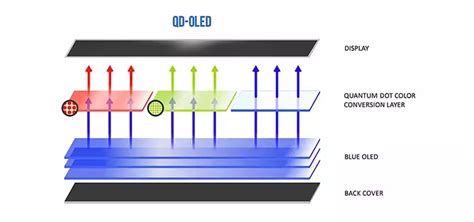
QD-OLED — what I liked and what bothered me
When I put the QD-OLED on, I immediately noticed how vivid HDR highlights became. Explosions, specular reflections, and bright neon signage just felt more saturated and impactful. In gaming, the colors were striking in a way that made environments feel more tangible. If you like that “pop” and hyper-vibrant HDR look, QD-OLED delivers.
Specific things I appreciated: the color accuracy for saturated shades — blues, greens, magentas — was superb out of the box for the content I watch. Off-axis viewing surprised me: colors held up very well when I viewed from the side, better than I expected. For bright-room daytime viewing, highlights cut through reflections nicely and the image kept a lively sheen.
What disappointed me: I noticed slightly less uniformity in very dark scenes compared to WOLED — in some movies there were faintly visible “darker bands” or slight vignetting around the edges when the whole screen was near-black. Also, the QD-OLED I tested handled very low-light shadow transitions a bit less smoothly, so tiny near-black gradients could show stepping or faint grain. Finally, the initial UI on my model had a glossier, more reflective finish that emphasized room reflections unless you adjusted lighting.
Pros & cons
WOLED — pros & cons
- Pros: Exceptional black levels, excellent uniformity, natural skin tones, re…
Ambient light: In my bright living room during daytime, QD-OLED's highlights and punch were more noticeable through window glare; I preferred it for daytime viewing. At night, though, WOLED's perfect blacks felt more immersive for films.
UI and static elements: I often keep a news ticker or game HUD on screen for extended stretches. On both panels I took reasonable burn-in precautions (varying content, screensaver, lowering static brightness), but I personally felt more comfortable leaving the WOLED on with static UI because uniformity made retention less visually distracting. That said, after months I saw no permanent burn-in on either display; just slight temporary retention that faded.
Gaming: I tested fast shooters and cinematic single-player games. QD-OLED’s saturated HDR made explosions and neon signs more fun—there’s a visceral thrill to it. WOLED, meanwhile, delivered a slightly more filmic color grading which felt more natural for story-driven games.
Calibration and settings: Both benefited from basic calibration. I ran the built-in picture modes, set OLED-specific care settings (like pixel shifting and logo luminance limits), and used a low-blue setting for late-night viewing. After calibration, both looked excellent for their respective strengths.
Find top-rated Electronics products at great prices.
Shop Amazon →Buying guide — how to choose
Here’s how I would choose if I were buying today, and the questions I considered during my months of testing. Use these to match the technology to your priorities.
1) What’s your primary use?
- Movies in a dark room: lean toward WOLED. The deep blacks and filmic presentation are hard to beat for cinematic immersion.
- Mixed use, bright room, and gaming: consider QD-OLED. If you want punchy HDR and vibrant colors while still enjoying great blacks, QD-OLED is compelling.
- Sports and daytime TV: QD-OLED’s highlights and color pop make fast-moving, color-rich content look lively in bright conditions.
2) Are you worried about static UI or burn-in?
- Both technologies can show retention if abused. I noticed no permanent burn-in after months of normal use on either panel, but if you plan to leave static HUDs on for hours daily (e.g., a streaming setup with a constant overlay), be conservative: choose the model with better warranty and use built-in pixel care features.
3) Do you care about color accuracy right out of the box?
- QD-OLED tends to look more “vivid” by default; WOLED will feel more natural. If you don’t want to tweak settings, pick the look you prefer immediately.
4) Size, distance, and seating layout
- If you have a wide seating arrangement, both are excellent from off-axis, but QD-OLED’s color retention off-axis was a pleasant surprise in my living room.
- For a smaller room where you sit close, both shine — WOLED for movie purity, QD-OLED for game immersion.
5) Practical tips I used when buying and setting up
- Check the panel finish: matte vs glossy can change reflections dramatically in your room. My QD-OLED reflected more light on glossy models.
- Enable pixel-shifting and logo luminance options; they’re subtle but help long-term care.
- Compare HDR peak brightness on the specific models you’re considering. QD-OLED models often list competitive HDR peaks.
- Read the warranty carefully — some manufacturers offer more generous screen-protection plans that can be reassuring.
- Try a calibration or at least use “movie” or “cinema” mode as a baseline. I found both panels benefited from modest tweaks (brightness/contrast and color temperature).
When price is a deciding factor
In my experience price swings a lot by model and size. WOLED models tend to be available at a broader range of price points because the manufacturing process is more mature and there are many established models across price tiers. When QD-OLED first arrived it often commanded a premium, but prices have been moving and there are competitive options. My advice: if both are in your budget, pick by use-case. If you must save, WOLED often delivers the sweetest value for movie lovers.
Final thoughts and conclusion
After living with both WOLED and QD-OLED for months, I’ve come to a practical, experience-driven conclusion: pick the technology that fits how you actually use your TV.
In my experience, WOLED is the safer, more refined choice for cinematic viewing — it gave me perfect blacks, consistent panel uniformity, and a film-like rendering that made movies feel intentional and polished. QD-OLED, on the other hand, made gaming and HDR content sing — I loved the vivid highlights, the saturated hues, and the extra sense of pop during action scenes. The trade-offs are real but subtle: QD-OLED can show a bit more near-black irregularity on some units and may reflect more in glossy finishes, while WOLED can feel marginally less explosive in peak HDR moments.
If I were buying again for my main living room and I mostly watch movies in the dark, I’d choose WOLED. If I were buying for a bright room where I also play lots of HDR games and want vivid colors, I’d go QD-OLED. Both technologies deliver astounding picture quality that would have seemed impossible a few years ago — whichever route you pick, you’re getting a display experience that’s a big step above traditional LED/LCD.
Ultimately, what mattered most to me was matching the panel to the room and the content I care about. After months of hands-on use, I can honestly say both panels delighted me in different ways — and I’m happy to still have them both on rotation depending on my mood and what I’m watching.