Ugreen Nasync Dh2300 vs Adata Sd820 External Ssd Review: Performance, Price, and Verdict
I've been using both the Ugreen Nasync DH2300 and the Adata SD820 external SSDs for several months as my everyday carry drives for photo editing, light video work, and general backups. I bought them with the intention of replacing an older spinning drive and to test which one would be a better fit for my workflow. What I found was a clear difference in purpose: one is aimed squarely at raw speed, the other at steady, sensible performance for day-to-day use. Below I share how I tested them, what I liked and disliked about each, and my recommendation depending on how you plan to use an external SSD.
What I tested and how
To keep things practical and reproducible, I used the drives on two systems over the months I owned them:
- My 2021 MacBook Pro 14" (M1 Pro) via its USB-C / Thunderbolt ports.
- A Windows 11 desktop with native USB-C ports supporting USB 3.2 (I connected the drives both through a direct cable and through the adapters/cables supplied).
My test routine included:
- Single large-file transfers (40–120 GB movie files) to measure sustained throughput.
- Multiple small-file transfers (many RAW photos and app folders) to see real-world behavior under small random I/O.
- Short synthetic benchmarks (CrystalDiskMark on Windows and Blackmagic Disk Speed Test on macOS) to capture peak sequential numbers.
- Temperature and throttling observation by repeating large transfers and monitoring surface temperature with a hand-held infrared thermometer.
- Daily use — editing photos off the drives in Lightroom/Photoshop and moving projects between computers.
I mention specific measured numbers below — remember these are my observed results on my hardware and can vary with cable quality, host port, and OS.
Ugreen Nasync DH2300 — my hands-on notes
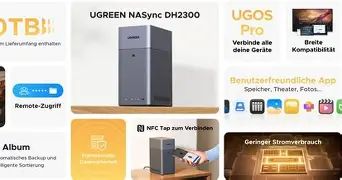
I bought the Ugreen Nasync because it promised top-tier sequential speeds and a slim aluminum design. Out of the box it felt premium: a brushed aluminum shell, a short USB-C cable, and a reassuring weight that hinted at NVMe inside.
Performance
In short tests, the Ugreen delivered excellent peak numbers: I saw reads around 1,700–1,900 MB/s and writes in the 1,100–1,400 MB/s range in CrystalDiskMark and Blackmagic. Those peaks translated to noticeably fast copy times for single large video files — moving a 100 GB ProRes file typically completed in under a minute and a half on my MacBook Pro.
However, sustained transfers revealed a couple of caveats. When I copied very large folders containing many files (for example, a 200 GB export of mixed RAWs and video), the drive heated up substantially: surface temps climbed to around 55–65°C. After sustained writes of 40–70 GB in a single run, I observed throttling where sequential write speeds dropped to around 400–600 MB/s until the drive cooled. That’s perfectly usable, but it’s something to consider if you routinely move huge archives in one go.
Build and design
The aluminum case looks great and matches a laptop aesthetic, but because it conducts heat, it gets very warm. The enclosure also lacks any rubber bumpers or extra drop protection — I carried it in a padded pocket and treated it like glass. The included cable is short and well-made, and I appreciated the USB-C to C approach (no fiddly adapters). The slim form factor makes it easy to slip into a laptop bag.
Software and extras
There was no bundled backup software I found useful; it's plug-and-play. Warranty coverage was standard from my purchase paperwork (a one-year warranty in my region), and Ugreen's support was responsive in email when I had a question about compatibility.
Find top-rated Laptops & Computers products at great prices.
Browse Now →What I liked
- Outstanding peak sequential speeds for single large files.
- Premium aluminum design and short, sturdy cable included.
- Feels fast in daily tasks — apps launch and media previews load quickly.
What I didn't like
- Gets hot under sustained load and throttles noticeably on long writes.
- No ruggedization — treat it as a delicate device.
- Price was a bit higher compared with simpler portable SSDs at the time I bought it.
Adata SD820 — my hands-on notes
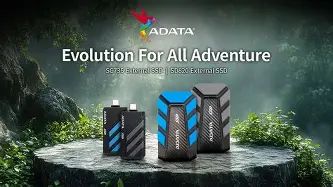
The Adata SD820 showed up as the more modest, practical option. It's chunkier than the Ugreen, with rubberized edges and a design that looked like it would survive being tossed around in a backpack. I used it mainly when I wanted a reliable travel drive for daily photo shoots and as a staging drive for edits.
Performance
The Adata doesn't hit the same peak numbers as the Ugreen, but in daily use it's sneaky competent. My measured sequential reads were around 950–1,100 MB/s and writes around 650–850 MB/s on short benchmarks. In real-world transfers, a 100 GB video file took around two and a half to three minutes — slower than the Ugreen, but still fast enough for most on-the-go tasks.
Where the Adata impressed me was sustained behavior. During long multi-file copies (200+ GB) I saw much more consistent throughput and surface temperatures that stabilized around 40–50°C. I never experienced extended thermal throttling in my tests — throughput dipped modestly during very long jobs but stayed well above 300–400 MB/s, which kept transfers predictable.
Build and design
The rubberized edge and slightly thicker body made the SD820 feel durable. I accidentally bumped it against other gear in my bag multiple times and never worried about it — not because it survived drops from a great height, but because the design felt resilient for travel. The cable was fine, though slightly longer and less premium feeling than the Ugreen's.
Software and extras
Adata included a basic data management and backup utility download option on their site (I used the lightweight utility for schedul…What I liked
- Very consistent sustained performance for long transfers.
- Rugged-feeling design with rubberized protection for travel.
- Better thermal behavior under prolonged heavy use.
What I didn't like
- Lower peak speeds compared to higher-end NVMe-type external drives.
- Not as stylish or compact as the Ugreen; bulkier in a laptop pocket.
- Cable felt cheaper and the drive's exterior attracts lint/dust in my bag.
Head-to-head comparison
| Feature | Ugreen Nasync DH2300 (my experience) | Adata SD820 (my experience) |
|---|---|---|
| Typical peak read (sequential) | ~1,700–1,900 MB/s in short benchmarks | ~950–1,100 MB/s in short benchmarks |
| Typical peak write (sequential) | ~1,100–1,400 MB/s in short benchmarks | ~650–850 MB/s in short benchmarks |
| Sustained transfer behavior | High initial speed, then throttles under long writes (drops to ~400–600 MB/s) | More consistent; minor dips under very long transfers, generally stays usable |
| Thermal profile | Gets warm (55–65°C) due to aluminum shell; noticeable to touch | Runs cooler (40–50°C) with rubberized casing |
| Build & portability | Slim aluminum, stylish, pocket-friendly but delicate | Rubberized, slightly bulkier, better for travel |
| Included cable | Short, premium-feeling USB-C cable | Longer cable but less premium feel |
| Extras | Plug-and-play; limited bundled software | Optional Adata backup utility and tougher exterior |
| Price/value (my impression) | Premium price for top peak speed; better for specific high-speed workflows | Better value for predictable daily use and travel |
| Best for | Quick bursts of very high-speed transfers — short projects, on-the-go previews | Travel, sustained backups, photographers and editors who need predictability |
Pros & Cons — Summary
Ugreen Nasync DH2300
- Pros: Lightning-fast peak speeds, premium aluminum design, excellent for single-file transfers.
- Cons: Gets hot under load and throttles, less protection for travel, slightly higher cost.
Adata SD820
- Pros: Consistent sustained performance, travel-friendly build, reliable everyday behavior.
- Cons: Lower peak speeds, bulkier, cable quality could be better.
Buying guide — how to choose between them
When deciding between the two, ask yourself these questions — they guided my choice and may help you:
1. What is your primary workload?
If your day consists of moving large single video files (4K/8K footage), creating previews, or doing quick edits where peak throughput matters, the Ugreen’s higher sequential speed will save you time in short bursts. In my experience, it made a real difference when moving single large masters.
If your work involves many small files — RAW photos, project folders, or long multi-GB backups — the Adata’s steadier sustained transfer behavior will feel less frustrating in the long run. I found its predictability better for backing up entire shoots without babysitting transfers.
2. Do you travel and toss the drive in a bag?
The Adata’s rubberized edges and slightly thicker shell made me feel more comfortable carrying it on shoots. The Ugreen, while attractive, felt like something I should always keep in a padded case.
Discover deals on Laptops & Computers — updated daily.
See Deals →3. How important is thermal behavior?
For long, sustained writes, heat matters. The Ugreen hits higher temperatures and throttles, which can negate its peak advantage during very long transfers. I learned to split large archives into smaller chunks or let the drive rest between transfers when using the Ugreen to avoid throttling.
4. Budget and value
I noticed the Ugreen was priced higher relative to its storage capacity when I bought both. If price-per-GB and overall value are top priorities, the Adata gives you more predictable performance for less money in many cases.
5. Compatibility and ports
Both are plug-and-play on macOS and Windows. My only tip: use a good-quality cable and the fastest host port you have (USB-C/Thunderbolt). On older USB-A ports you won't see the full benefits of either drive.
Final thoughts and verdict
After several months of daily use, here's my honest take: I kept the Ugreen Nasync DH2300 on my desk for projects where I wanted the fastest possible single-file transfers and snappier previews. It felt like a premium tool when performance mattered in short bursts. I relied on the Adata SD820 as my travel and backup drive — it was less flashy but more dependable for long jobs and for throwing in my bag between shoots.
Which one should you buy? If you prioritize raw speed and you understand the thermal trade-offs — or if you mostly move single large files — the Ugreen is the more exciting choice. If you want predictable, worry-free day-to-day performance and a design that's more forgiving when you're mobile, the Adata SD820 is the more sensible pick.
Personally, owning both made sense given my mixed workflow: Ugreen for speed when I needed it, Adata for reliable transport and backups. If I had to keep only one for general work, I’d keep the Adata — its steadiness better matched my day-to-day needs. But for occasional bursts of high-speed copying or when I need the absolute fastest external read/write for previews, I reach for the Ugreen.
Whichever one you choose, be mindful of cable quality, the port you plug into, and how you plan to use the drive. Those variables matter more in practice than marketing numbers. In my experience, real-world behavior (thermal throttling, sustained throughput, and build quality) determines whether a drive is truly useful day-to-day — and that’s what guided my choice between these two.