Is the Home Cinema 5050Ub Still Good in 2026? Long-Term Review
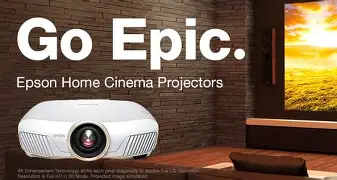
I've been using an Epson Home Cinema 5050Ub in my living room / dedicated theater for several months now, and I wanted to share a candid, long-term perspective on whether this projector still makes sense in 2026. I bought this unit because I wanted a bright, flexible projector that could handle movies, TV shows, and the occasional gaming session, and I put it through a few months of daily use — movie nights, sports, console gaming, and late-night streaming binges. What follows is my hands-on experience: what I loved, what disappointed me, and who I think this projector is still a good fit for.
First impressions and setup
Out of the box the 5050Ub felt solid and well-made. Physically, the chassis and lens build gave me confidence it wasn't a throwaway piece of gear. I mounted it on a ceiling mount and used the motorized lens controls (zoom, focus, and lens shift) to dial in the image onto a 100" fixed screen. In my experience, the lens shift was generous enough to avoid the need for extreme keystone corrections — that made the install much simpler than I expected.
I spent the first week experimenting with picture modes and calibration. The projector has several presets and an Advanced Image menu with color management, gamma, and an adjustable iris/dynamic contrast setting. I ended up calibrating it to my room using a basic colorimeter and test patterns — nothing professional-grade — and the difference after calibration was noticeable. Black levels improved, colors looked more natural, and HDR tone mapping tightened up a bit.
Picture quality: movies and TV
My primary use case has been watching films in a dim-to-dark room, and here the 5050Ub mostly shines. The image is punchy and detailed. Even though the 5050Ub is not a native true 4K projector in the strictest sense, its pixel-shifting 4K enhancement does a very good job with 4K content — I repeatedly found myself forgetting I was looking at a pixel-shifted image rather than a native 4K panel. Fine details in film grain, subtitles, and high-resolution camera work held up well on a 100" screen.
Color reproduction is one of the strengths I noticed early. Skin tones were natural after a bit of calibration, and saturated colors (like reds and deep blues) were vivid without feeling oversaturated. The projector's color processing handled complex scenes well; it reproduced the nuanced teal-and-orange grading of several recent films in a pleasing way.
Black level and contrast are where opinions will split. For an LCD-based projector (3LCD with a dynamic iris), the 5050Ub delivers remarkably deep blacks and a strong perceived contrast in low ambient light. That said, it doesn't match the absolute native contrast of the very best JVC D-ILA models or the inky blacks of an OLED TV. In practical viewing, however, I found the blacks to be entirely acceptable for cinematic content — only in the absolute darkest scenes, side-by-side against a top-tier reference projector, would you see a difference.
HDR performance and tone mapping
HDR is a mixed bag. The 5050Ub supports HDR playback, but like most projectors that don't have massive brightness headroom, its HDR tone mapping is conservative. Bright specular highlights in HDR scenes still pop compared to SDR, but they won't reach the dazzling peaks of a high-end laser projector or a modern HDR-capable TV. I noticed that in certain HDR-heavy demos (space scenes, sun flares), the projector compressed highlights to preserve shadow detail rather than push speculars to a visually bright peak.
In my experience, the best results came from a mix of careful calibration and tweaking the HDR-related settings when watching HDR content. If you're someone who demands the brightest HDR highlights and the most dramatic HDR punch, this projector won't fully satisfy that craving in 2026 — but for most movie-watchers who prioritize cinematic balance, it remains very good.
Gaming and sports
I've played a few multiplayer sessions on a console connected to the 5050Ub and watched a dozen or so sporting events. The image size and immersion are fantastic for both. The projector handles motion quite well: fast pans, quick camera cuts, and sports action remain reasonably smooth, and motion interpolation can be enabled for those who prefer ultra-smooth motion — though I rarely use it because it can introduce the "soap opera" effect.
Discover deals on Electronics — updated daily.
See Deals →On the gaming front, the projector performs well at 60Hz and feels responsive for casual and competitive play. If you're chasing the absolute lowest input lag for competitive gaming at 120Hz and beyond, modern HDMI 2.1-capable displays or the latest projectors with native support for high refresh rates will be a better fit. In my experience, the 5050Ub is excellent for single-player, cinematic gaming and fine for casual online multiplayer.
Usability, menus, and daily life
The menus are extensive but not overwhelming. I appreciated the inclusion of multiple picture memories and the ability to save my calibrated settings. The remote is typical for a projector — functional, with backlight, and easy to use in the dark. One practical note: lamp projectors require consideration for lamp replacement and brightness degradation over time. I've noticed a very slight drop in peak brightness after a few months of regular use, but it's minor and manageable by switching modes when I want brighter images.
Fan noise is another real-world factor. In Eco mode the projector is quiet — often inaudible from my sitting position in typical movie listening levels. In brighter modes, the fan becomes noticeable during quiet movie moments. I personally mostly use Eco or Normal and rarely felt the fan was intrusive.
Reliability and maintenance
After several months there's been no hardware trouble: no dead pixels, no image retention, and the motorized lens has stayed accurate. I keep the unit on a scheduled standby when not in use and follow basic room ventilation practices. Lamp replacement is an eventual cost with projectors like this, so factor that into long-term ownership. Filter maintenance was straightforward in my unit — cleaning every few months under typical use was all it required.
What I appreciated most
- Versatility: It handled movies, streaming, and gaming effectively without feeling compromised. <…
Here are the practical factors I considered and would recommend you evaluate for your own decision:
1. How important is absolute HDR brightness to you?
If you want the brightest HDR peaks and the most dynamic highlights, consider a modern laser projector or a large OLED/mini-LED TV. If you prioritize cinematic balance and accurate colors in a darkened room, the 5050Ub still performs very well.
2. Room type and ambient light
The 5050Ub is best in a dim or dark room. In moderate ambient light you'll lose much of the perceived contrast. If you need a projector for a bright living room without curtains, look at higher-brightness laser models.
3. Screen size and seating distance
I used the 5050Ub with a 100" screen and seated about 10–12 feet back; it was immersive without revealing pixel structure. If you want very large screens (130"+) you may need to account for brightness and lens throw — verify throw distance and lens options for your room.
Shop the latest Electronics picks on Amazon.
Shop Amazon →4. Gaming needs
If you want a single projector for hardcore competitive gaming and need 4K@120Hz or VRR support, consider newer models that explicitly advertise those features. The 5050Ub is great for cinematic gaming and single-player experiences, but it's not the most futureproof option for high-refresh competitive play.
5. Ongoing costs and maintenance
Factor in lamp replacement and the small possibility of brightness degradation over years. Laser projectors reduce that maintenance burden but often cost more upfront.
6. Used vs new and price considerations
In 2026 you might find 5050Ub units used or discounted as newer models proliferate. If you can get one at a good price, it represents solid value for movie-centric setups. If you're paying full new price and can afford a laser model, evaluate whether a laser's maintenance-free operation and higher HDR capability are worth the premium.
Final thoughts and conclusion
After several months with the Home Cinema 5050Ub I can say this: in my experience it still delivers a very satisfying cinematic image for movie lovers who prioritize color accuracy, installation flexibility, and large-screen immersion without paying top-tier prices. What I found was a projector that rewards calibration, handles most content gracefully, and offers very good day-to-day reliability.
Where it falls short in 2026 is in absolute HDR peak brightness and some of the modern conveniences that laser projectors and the latest HDMI-capable displays offer. If you want a maintenance-free setup with the absolute brightest HDR highlights or the latest high-refresh gaming features, there are newer options that will serve you better. But if you want a projector that gives you a big, film-like image with pleasing colors and solid contrast in a controlled lighting environment, the 5050Ub remains a sensible, enjoyable choice.
In my experience, ownership has been rewarding: I've had many movie nights where the projector delivered immersive, engaging pictures that rivaled much more expensive setups. One thing that bothered me at times was fan noise in brighter modes, and I did miss the absolute pop of the very latest high-brightness laser projectors — but those are trade-offs I was willing to accept for the overall image quality and value the 5050Ub offered.
So, is the Home Cinema 5050Ub still good in 2026? Yes — particularly if you're buying smart (used or at a discount), you watch primarily in a dark room, and you care more about cinematic color and large-screen immersion than having the bleeding edge of HDR peak brightness or gaming refresh rates. In my experience it remains a projector that can bring a real theatrical feel to your home without forcing you into the highest price tier.