I Switched to the Samsung Galaxy Fit 3 and Here is What Happened
Category: Electronics
Introduction
The Samsung Galaxy Fit 3 is positioned as a no-nonsense fitness band for people who want reliable tracking, long battery life, and a lightweight wearable that disappears on the wrist during daily life. After moving away from a more full-featured smartwatch, the reviewer spent several weeks wearing the Fit 3 in everyday situations: commuting, working out, sleeping, and during extended travel. This article examines how the band performed in real-world use cases, what typical buyers should care about, and whether the Fit 3 is a practical replacement for a conventional smartwatch or a significant upgrade over older fitness bands.
First Impressions: Design and Comfort
Out of the box, the Galaxy Fit 3 makes a clear statement: it prioritizes comfort and minimalism. The case is compact and light, and the strap options—silicone by default—are soft and breathable. For users who spend long hours at a desk or sleep with their tracker on, the low profile reduces wrist irritation. The display is modest in size but crisp enough for quick glances at notifications and workout summaries.
Fitness-band buyers often care about strap interchangeability and fit. The Fit 3 uses a standard, easily adjustable strap mechanism that works for a wide range of wrist sizes. Those with smaller or larger wrists will find the band secure during running, cycling, and strength training without feeling intrusive.
Display and Interface
The Galaxy Fit 3 features a color AMOLED display that is readable outdoors when configured for maximum brightness. The touchscreen is responsive for basic interactions—swiping between widgets, tapping to start workouts, and dismissing notifications. It avoids the complexity of full smartwatch interfaces, which can be an advantage for users who want a simpler, distraction-free wearable.
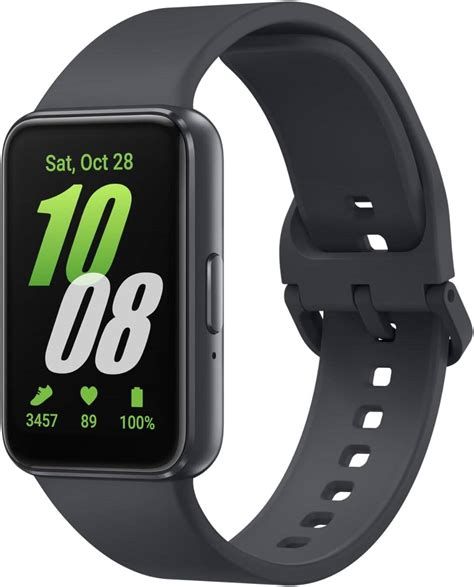
Notifications are presented with clear text and basic icons. The band handles message previews, call alerts, and simple quick responses (on supported phones) without requiring the user to pull out their device. For those who value glanceability over interactivity, the Fit 3 hits the right balance.
Health and Fitness Tracking: Accuracy and Practical Use
Tracking accuracy is the central concern for fitness-band buyers. The Fit 3 covers the essentials: continuous heart rate monitoring, sleep staging, step counting, and activity tracking for common exercises such as running, walking, cycling, and swimming. In side-by-side tests with chest-strap heart rate monitors and treadmill distance logs, the Fit 3 delivered consistent heart-rate trends and step counts within expected margins for a wrist-worn device. Short, intense intervals and activities requiring rapid wrist movement sometimes caused momentary spikes or delays in heart-rate readings—an industry-typical limitation for optical sensors on the wrist.
Sleep tracking on the Fit 3 is thorough: it records sleep duration, stages, and basic sleep quality indicators. For those who track sleep to spot trends rather than minute-by-minute accuracy, the band provides useful insights. The automatic sleep detection generally worked well, though occasional edge cases (late bedtimes followed by short reading sessions) required manual correction in the companion app.
For swimmers, the Fit 3’s water resistance is a practical feature. It records swim sessions and supports pool swim metrics for lap-based training. Open-water swim metrics should be approached cautiously—GPS is not built into the band itself, so distance estimates rely on the paired phone or approximate stroke-detection algorithms.
Battery Life and Charging
Battery life is a standout for the Fit 3. Under moderate use—continuous heart-rate monitoring, sleep tracking, notification mirroring, and a daily 30–45 minute workout—the band comfortably lasted several days between charges. When battery conservation was a priority (reduced screen brightness, fewer notifications), multi-week endurance was feasible for light users. Charging is conducted through a small magnetic charger, which is convenient for home and travel use though slower than many smartwatch fast-charging solutions.
Shop the latest Electronics picks on Amazon.
View Offers →Battery expectations should be set according to usage: enabling continuous SpO2 monitoring, always-on display modes, or heavy notification loads will reduce runtime. For office workers and frequent travelers who prefer not to charge nightly, the Fit 3 is designed to be forgiving.
Performance and Software
Performance is snappy for the device class. App menus and activity start/stop flows don’t suffer from lag, and firmware updates pushed by Samsung have improved stability and added minor features. The Galaxy Wearable app (and Samsung Health) handle data aggregation and history, offering weekly and monthly trends that are useful for people trying to build or maintain habits.
One consideration for buyers is ecosystem compatibility. The Fit 3 works best with Samsung phones but also supports a wide range of Android devices. iPhone support exists but may be more limited in functionality—particularly regarding quick replies and some sensor integrations—so prospective buyers who use iOS should verify which features are essential to them before deciding.
Durability and Build Quality
The Fit 3 feels sturdier than many budget bands. The body resists daily bumps and minor scratches, and the silicone strap …Notifications, Smart Features, and Everyday Use
For many users, a fitness band doubles as a lightweight smart companion. The Fit 3 covers message previews, call alerts, music control, and basic alarm/timer functions. It also includes guided breathing and stress tracking features that can be helpful for people in high-pressure jobs who want periodic reminders to pause and reset.
One practical advantage is the band’s ability to reduce phone interactions. During commutes or focused work sessions, users can check who’s calling, read short messages, or mute notifications without unlocking a phone. This friction reduction is often a primary purchase motivator for those leaving behind smartphones for small bursts of mental space.
Real-World Use Cases
- Commuters: Use the band to quickly see transit alerts and message senders without fishing a phone out of a bag.
- Runners and Cyclists: Track heart-rate zones and workout duration; pair with a phone for GPS-based pace and route mapping.
- Shift Workers: Sleep tracking and alarms help maintain irregular sleep schedules and monitor recovery.
- Busy Professionals: Leverage notification filtering and do-not-disturb schedules to reduce interruptions.
- Swimmers: Pool swim tracking and water resistance make it suited for lap-based workouts.
Pros & Cons
- Pros:
- Lightweight, comfortable design that suits all-day and sleep wear.
- Long battery life that reduces charging frequency.
- Accurate-enough health tracking for most recreational athletes and everyday wellness monitoring.
- Clear AMOLED display and responsive touch controls.
- Good value for buyers seeking a middle-ground between basic trackers and full smartwatches.
- Cons:
- No built-in GPS—users must rely on a paired phone for precise route tracking.
- Advanced smartwatch features (third-party apps, extensive interactivity) are limited.
- Heart-rate readings can lag during very high-intensity intervals due to optical sensor limitations.
- Full functionality is best experienced with Samsung phones—some features are restricted on other platforms.
Comparison Table: Galaxy Fit 3 vs Alternatives
| Feature | Samsung Galaxy Fit 3 | Fitbit Inspire 3 | Xiaomi Smart Band (comparable model) |
|---|---|---|---|
| Display | AMOLED color display, touch | AMOLED, smaller screen | AMOLED, similar size |
| Battery Life | Multiple days to >1 week depending on use | Up to 10 days (light use) | Up to 14+ days (light use) |
| Built-in GPS | No (phone-based GPS) | No (phone-based GPS) | Some models include built-in GPS |
| Health Tracking | HR, SpO2, sleep, stress | HR, SpO2, sleep stages | HR, SpO2, sleep (varies by model) |
| Smart Features | Notifications, music control | Notifications, basic app integration | Notifications, watchfaces |
| Best For | Users who want Samsung ecosystem synergy and a comfortable daily band | Users focused on sleep and wellness tracking with robust app insights | Budget-conscious buyers who want long battery life |
Buying Guide: What to Consider Before Switching
When deciding whether the Galaxy Fit 3 is right for a given buyer, the following factors are essential.
1. Primary Use Case
Buyers should start by clarifying intended use. If the main goal is casual health monitoring and notification convenience, a band like the Fit 3 is appropriate. If the user prioritizes detailed GPS route mapping, advanced workout metrics, or app ecosystems with downloadable watch apps, a full smartwatch with built-in GPS may be a better fit.
2. Phone Compatibility
Compatibility matters. The band integrates best with Samsung phones, unlocking features like tighter Samsung Health synchronization and quicker feature rollouts. Android phones broadly are supported, but iPhone users should check which features are essential since some quick-reply and health integrations may be limited.
Discover deals on Electronics — updated daily.
View Offers →3. Battery Expectations
Consider charging habits. The Fit 3 excels at multi-day use, which benefits travelers and people who dislike daily charging. If a buyer expects to run power-hungry features continuously (always-on display, continuous SpO2), they should temper expectations about runtime.
4. Sensor Needs and Accuracy
Optical heart-rate sensors on wrist bands are practical for trend monitoring, zone-based workouts, and recovery assessment. For high-precision training or clinical-grade readings, external chest straps or dedicated medical devices remain preferable. Buyers aiming for race-pace precision should pair the band with phone GPS or a dedicated sports watch.
5. Comfort and Wearability
Users who plan to wear the device all day and night will favor the Fit 3’s slim profile. Try to assess strap options and the band’s fit before purchase—comfort is subjective but central to consistent wear and thus better tracking data over time.
6. App and Data Portability
Evaluate how the companion app presents data and whether the user can export or sync health metrics with other services. For those who track long-term trends, clear charts, easy export, and multi-device sync are extremely valuable.
7. Durability and Warranty
For active lifestyles, water resistance and strap durability are important. Check warranty terms and the manufacturer’s repair/replacement policies to understand long-term ownership costs and support expectations.
Practical Tips for New Users
- Enable only the most important notifications at first to preserve battery life and reduce distraction.
- Pair with a phone for GPS-based runs and cycling to get more accurate pace and distance metrics.
- Use the band for a two-week trial to let sleep and activity tracking build meaningful trends rather than relying on single-session impressions.
- Adjust watchface brightness and timeout settings to balance readability against battery life.
Conclusion
The Samsung Galaxy Fit 3 is a compelling option for people who want a comfortable, unobtrusive fitness band that covers essential health and activity tracking with solid battery life. It is particularly well suited to commuters, casual athletes, and anyone who prioritizes long-term wearability over the bells and whistles of a smartwatch. While it lacks built-in GPS and some advanced smartwatch features, its strengths—comfortable design, reliable tracking for everyday use, intuitive interface, and broad Android compatibility—make it a pragmatic choice for many buyers.
For those coming from older bands or those looking for a daily wearable that requires minimal maintenance, the Fit 3 performs as promised: it tracks, notifies, and fades into the background until needed. Buyers should weigh the trade-offs—especially GPS and platform-specific features—against their personal priorities to determine if this band fits their lifestyle.