Blind Test: Maingear Mg 1 Ultimate vs Asus Zenbook S 16 - Which is Actually Better?
Introduction
When shoppers consider a high-end laptop today, priorities often include raw performance, display quality, battery life, and portability. Two machines that compete directly in that space are the Maingear Mg 1 Ultimate and the Asus Zenbook S 16. On paper these laptops serve overlapping audiences—creative professionals, power users, and anyone who wants a premium Windows experience—but they approach design and engineering differently. This article performs a focused, practical comparison to determine which machine is actually better for specific real-world use cases.
What buyers typically care about
- Performance: CPU and GPU capabilities for content creation, multitasking, and light-to-heavy gaming.
- Display: Color accuracy, resolution, brightness, and aspect ratio for photo/video work or productivity.
- Portability: Weight, chassis size, and how easy the machine is to carry daily.
- Thermals and noise: Sustained performance without throttling, and acceptable fan noise under load.
- Battery life: Real-world endurance for remote work or travel.
- Build quality and input devices: Keyboard, trackpad, materials, and overall fit-and-finish.
- Connectivity and expandability: Ports, memory/storage upgrade options, and external display support.
- Value: How well the machine’s capabilities match its asking price for the intended user.
Product overviews
Maingear Mg 1 Ultimate — Brief overview
The Maingear Mg 1 Ultimate is positioned as a desktop-replacement-style laptop with a focus on high-performance components and thermal headroom. Built commonly for creators and enthusiasts who need powerful multi-threaded CPU performance and a strong discrete GPU, the Ultimate variant emphasizes sustained workloads: video rendering, 3D work, and game development. The chassis tends to be more substantial to accommodate cooling, and customization options for RAM and storage are often front-and-center for buyers who want a long-term machine.
Asus Zenbook S 16 — Brief overview
The Asus Zenbook S 16 targets users who want a balance of premium portability and a high-quality display. It emphasizes a thin-and-light profile with a focus on color-accurate screens, long battery life, and refined industrial design. While still capable of handling demanding applications, the Zenbook S 16 typically optimizes for efficiency over absolute thermal headroom, making it attractive to mobile creatives, business professionals, and anyone who prioritizes travel-friendly ergonomics.

Detailed analysis: performance and thermals
CPU and multi-threaded workloads: The Maingear Mg 1 Ultimate commonly ships with higher-TDP laptop CPUs and offers configurations that prioritize raw core count and sustained clock speeds. That design choice means it better maintains performance during long encoding or rendering sessions. In contrast, the Zenbook S 16 places greater emphasis on power efficiency; it performs well in bursty creative tasks and daily productivity but will usually trail the Maingear in sustained, multi-hour rendering or compile jobs.
GPU and graphics: The Ultimate’s discrete GPU options are generally more performant for GPU-accelerated video editing, real-time 3D previews, and moderate gaming. The Zenbook S 16 may include capable GPUs, but its thin profile and thermals place limits on prolonged heavy GPU loads—fine for occasional gaming or short GPU-accelerated tasks, less ideal for long render farms or high-frame-rate gaming sessions.
Thermals and noise: Maingear’s larger chassis allows for more aggressive cooling and therefore higher sustained performance; however, that tends to come at the cost of louder fan profiles under load. For users who prioritize performance over silence—video editors, developers compiling large projects, and gamers—this tradeoff is expected. The Zenbook S 16 prioritizes a quieter, cooler user experience, with fans that are more conservative and less intrusive during normal use; under heavy sustained loads, thermal throttling is more likely than on the Maingear.
Display, color, and creative use
Both machines aim to serve creators, but they do so with different philosophies. The Zenbook S 16 is well known for a color-accurate, high-resolution panel with broad coverage of professional color spaces and factory calibration on many models. It is particularly well-suited to photographers and mobile editors who need faithful color on the go. The Maingear Mg 1 Ultimate may offer excellent displays in some configurations—sometimes with higher refresh rates or larger panels—but buyers should verify factory calibration and color gamut if color-critical work is a primary concern.
Find top-rated Laptops & Computers products at great prices.
Browse Now →Portability and battery life
Weight and dimensions: The Zenbook S 16 tends to be significantly lighter and thinner, making it a better daily-carry laptop for commuters and frequent travelers. The Maingear is heavier and bulkier, closer to a desktop replacement—better for users who mostly work near an outlet or transport the machine in a larger backpack or case.
Battery life in real-world usage: The Zenbook S 16 excels at efficiency, often delivering long battery life for web browsing, document editing, and light multimedia consumption. The Maingear trades battery longevity for performance; battery life is adequate for short mobile sessions but falls short of the Zenbook when looked at from an all-day unplugged perspective.
Build quality, keyboard, and input
Both machines typically deliver a premium feel. The Zenbook S 16 emphasizes refined materials and a sleeker aestheti…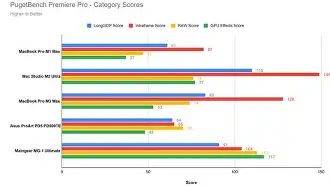
Connectivity and expandability
The Maingear often includes a broader selection of ports—full-size HDMI, multiple USB-A and USB-C ports, and sometimes a more capable Ethernet option—reflecting its role as a workstation replacement. The Zenbook S 16 focuses on a minimalist but modern set of ports: USB-C/Thunderbolt for docking and external displays, a microSD or full-size SD card slot on some SKUs, and a select number of USB-A ports. Upgradeability tends to favor the Maingear as well, with easier access to RAM and additional storage in many configurations; the Zenbook's thin design often precludes easy user upgrades beyond storage in some models.
Audio, webcam, and real-world communication
For video calls and content creation, both laptops offer competent webcams and microphones, with the Zenbook placing more emphasis on AI-enhanced noise reduction and video clarity in certain builds. Speakers on the Maingear are generally louder and better suited to immersive media playback, but the Zenbook often provides clearer mids for video conferencing. Buyers who depend on professional-grade audio should still plan to use external microphones and headphones for the best results.
Software, warranties, and support
Asus typically bundles its laptops with productivity and hardware-management utilities that help optimize battery profiles, update drivers, and tune fan curves. Maingear provides customer-focused support and a degree of customization during purchase, often with desktop-grade warranty options and more hands-on service for upgrades. Warranties and post-purchase support experiences vary by region and configuration; prospective buyers should confirm coverage details before purchase.
Looking for the best Laptops & Computers deals on Amazon?
See Deals →Pros & cons
Maingear Mg 1 Ultimate
- Pros: High sustained performance for CPU and GPU workloads; robust cooling; greater upgradeability and port selection; ideal for creators who need desktop-class performance in a transportable package.
- Cons: Heavier and bulkier to carry daily; louder under load; shorter battery life compared to efficiency-focused ultraportables; may be overkill for casual users.
Asus Zenbook S 16
- Pros: Thin and light with strong battery life; color-accurate, high-quality display options; quieter operation for everyday use; refined build and travel-friendly design.
- Cons: Less thermal headroom for sustained heavy workloads; limited upgradeability in thin configurations; discrete GPU performance (if present) is often constrained by chassis thermals.
Side-by-side comparison table
| Category | Maingear Mg 1 Ultimate | Asus Zenbook S 16 |
|---|---|---|
| Primary focus | Performance and workstation-class tasks | Portability and color-accurate productivity |
| CPU | High-TDP laptop CPUs (configurable) | Efficient high-performance mobile CPUs |
| GPU | Stronger discrete GPU options, better sustained GPU performance | Integrated or power-constrained discrete options |
| Display | Large panels, configurable (refresh or resolution) | High-resolution, factory-calibrated, color-accurate panels |
| Battery life | Shorter under heavy load | Longer for everyday use |
| Weight | Heavier (desktop-replacement) | Light and thin (ultraportable) |
| Thermals & noise | Better thermals, louder fans under load | Quieter operation, possible throttling under long heavy loads |
| Upgradeability | More user-upgrade friendly | Limited, often soldered components |
| Ports | More full-size ports and greater variety | Modern port selection with Thunderbolt emphasis |
| Best for | Video editors, 3D artists, developers needing desktop-like performance | Traveling creatives, business users, students needing a premium, portable laptop |
Buying guide: which to choose and why
Selecting between these two models depends on how the laptop will be used most of the time. Consider the following scenarios and decision points.
1. Workload profile
- If the primary tasks are multi-hour video renders, large code builds, or GPU-accelerated 3D previews, prioritize the Maingear Mg 1 Ultimate for its sustained throughput.
- If the workflow involves photo editing, color grading on the go, web design, or general productivity, the Asus Zenbook S 16 offers a better mobility-to-display-quality balance.
2. Mobility and travel
- Frequent flyers and commuters who need long battery life and a lightweight machine will prefer the Zenbook S 16.
- Those who rarely move their machine beyond a single bag and need desktop-like performance may accept the Maingear’s weight.
3. Upgradeability and future-proofing
- Buy the Maingear if the ability to add RAM, swap drives, and service the machine matter—this extends lifespan and total value.
- The Zenbook is more of a closed system; choose it when the priority is thinness and minimal maintenance rather than future upgrades.
4. Noise tolerance
- If fan noise is a concern during meetings or recordings, the Zenbook’s quieter profile is an advantage.
- If performance takes precedence and occasional loud fans are acceptable, the Maingear delivers higher sustained results.
5. Display needs
- Color-critical professionals who need factory-calibrated panels and predictable color accuracy should favor the Zenbook’s display options.
- Users who want faster refresh rates for gaming or prefer larger, higher-resolution panels can find suitable configurations in the Maingear lineup, but they should verify calibration if accuracy matters.
6. Budget and value
Both machines occupy premium price tiers, but they represent different value propositions: the Maingear is performance-focused value for power users; the Zenbook offers premium build and display for mobile professionals. Buyers should match the configuration to the required workload rather than overspending on unused performance.
Real-world use cases
To make the choices more concrete, here are typical buyer profiles and recommendations:
- Video editor who travels occasionally: Choose the Zenbook S 16 if mobility and a color-accurate screen matter more than the absolute fastest multi-hour render times.
- 3D artist working with large scenes: Opt for the Maingear Mg 1 Ultimate to benefit from better GPU thermal headroom and sustained performance.
- Software developer compiling large codebases: The Maingear will finish heavy builds faster under extended use due to its cooling and higher sustained CPU TDP.
- Student or business user who values battery life: The Zenbook S 16 is the stronger choice for long lecture days and on-the-go productivity.
- Hybrid user who wants both power and portability: This user must weigh compromises: choose a Maingear if performance is non-negotiable, or the Zenbook if daily carry comfort is essential.
Conclusion
Ultimately, neither laptop is universally better—each is better suited to certain priorities. The Maingear Mg 1 Ultimate stands out for users who demand higher sustained CPU/GPU performance, broader upgradeability, and more comprehensive port options. The Asus Zenbook S 16 excels for those who prioritize portability, display quality, and quiet, efficient operation. When deciding, buyers should map their most common tasks to these strengths: choose the Maingear for workstation-class workloads and expandability, and the Zenbook for mobile creativity, comfort, and battery life. Matching the machine to the user's daily reality will deliver the best long-term satisfaction.